

In behavioral health, the patient experience doesn’t start in the therapy room. It starts at intake, and it continues through scheduling, communication, billing, and payment.
When these steps feel fragmented, patients disengage. Intake forms go unfinished. Appointments are missed. Billing questions pile up. Staff spend hours chasing paperwork and answering repetitive calls.
But when everything is connected through the right client portal, the experience changes. Intake becomes seamless. Communication becomes secure and efficient. Appointments are confirmed. Payments are transparent. Administrative burden drops.
From intake to payment, your client portal is more than a convenience—it’s a strategic growth tool.
Client Portal vs. Patient Portal in an EHR: What’s the Difference?
In behavioral health, the terms “patient portal” and “client portal” are often used interchangeably. What matters most isn’t the label—it’s whether the portal is built to support the unique workflows of therapy and psychiatry practices.
Behavioral health practices have needs that go beyond simple record access. A strong portal should connect intake, scheduling, communication, and billing into one cohesive experience.
Whether it’s called a patient portal or client portal, it should prioritize:
- Intake paperwork
- Session scheduling and confirmations
- Secure, HIPAA-compliant communication
- Billing transparency and online payments
- Ongoing treatment-related documentation
In behavioral health, relationship continuity matters. A portal must support ongoing engagement—not just administrative access.
When designed specifically for behavioral health workflows, a portal becomes a core part of the patient experience rather than a standalone add-on.
What Should a Behavioral Health Patient Portal Include?
A behavioral health client portal should do more than store documents. It should connect intake, scheduling, communication, and billing into one cohesive experience.
At a minimum, it should include:
- Digital intake forms and document completion
- Online appointment requests and confirmations
- Automated appointment reminders
- Secure, HIPAA-compliant messaging
- Billing visibility and online payments
- Mobile-friendly access
- Full integration with scheduling and documentation workflows
A portal that only handles one or two of these functions creates friction. A portal that integrates them reduces fragmentation and helps protect revenue.
Valant’s integrated client portal is designed specifically for behavioral health practices, supporting everything from digital intake to online payment within a unified workflow.
4 Must-Have Portal Features for Therapy and Psychiatry Practices
As practices grow, the following four portal features become non-negotiable.
1. Digital Intake That Reduces Drop-Off
New patient drop-off during intake is a major operational challenge. When paperwork is long, confusing, or requires printing and scanning, patients disengage. The right portal should make intake feel simple, not overwhelming.
To reduce intake abandonment:
- Use digital forms that save progress automatically.
- Make the process mobile-friendly.
- Send reminders to complete intake before the first appointment.
- Integrate forms directly into the EHR so staff don’t have to re-enter data.
For larger practices, intake management becomes even more complex. Structured workflows are essential, as outlined in this guide to managing intake at scale.
2. Automated Appointment Reminders to Reduce No-Shows
Does a patient portal reduce no-shows? Yes—when it includes automated reminders.
Missed appointments hurt both continuity of care and revenue. Portals help by:
- Sending automated email or text reminders
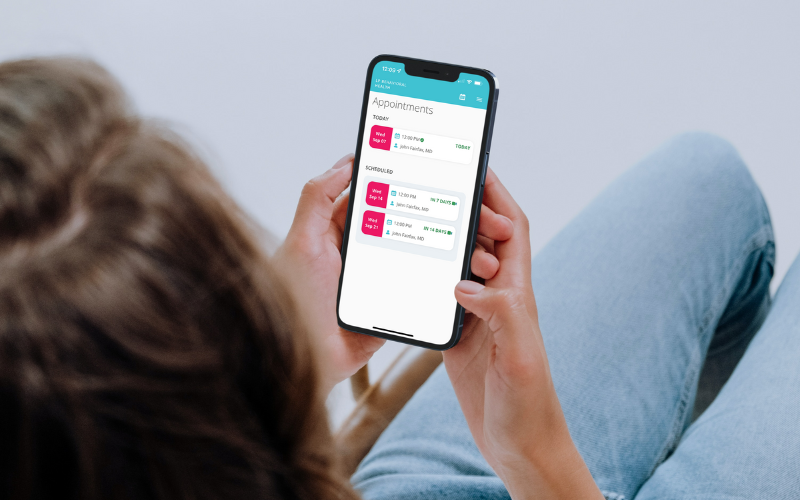
- Allowing patients to confirm or cancel online
- Providing easy access to appointment details
Because reminders are automated, they reduce admin workload while improving attendance.
When connected to your scheduling system, reminders become part of a seamless workflow—meaning no manual tracking required.
3. Secure Messaging That’s Truly HIPAA Compliant
Is secure messaging in a client portal HIPAA compliant? It can be—if it’s built within a secure, encrypted environment that meets HIPAA standards.
Messaging inside a properly designed portal:
- Keeps PHI within the EHR ecosystem
- Avoids insecure email chains
- Documents communication automatically
- Protects both the patient and the provider
The key is ensuring the messaging system is fully integrated and encrypted, not a workaround using standard email.
4. Billing Visibility and Online Payments
Billing confusion is one of the biggest drivers of front-desk phone volume. When patients have clear visibility, staff spend less time answering repetitive billing calls. That’s because transparency protects revenue—and reduces friction.
A strong portal reduces billing questions by allowing patients to:
- View balances
- See statements
- Understand charges
- Make secure online payments
This is especially important for practices offering services like group therapy, where reimbursement structures can be complex. Learn how improving revenue workflows across services can strengthen your entire practice.
Client Portal FAQs
How Do We Set Up Automated Appointment Reminders Through the Client Portal?
Automated reminders are typically configured within your behavioral health EHR by selecting when reminders should be sent and how patients should receive them. Practices can choose reminder timing (such as a few days before an appointment), select delivery methods like email or SMS, and allow patients to confirm or cancel directly through the portal.
Once activated, reminder rules run automatically in the background—helping ensure patients receive timely notifications without requiring staff to manually reach out before every appointment.
Because reminders are connected to the scheduling system, confirmations and cancellations stay aligned with the calendar. This reduces repetitive outreach, supports attendance, and frees staff to focus on patient care instead of reminder calls.
How Do Patient Portals Help Reduce Billing Questions and Admin Time?
Every phone call about a statement takes staff away from higher-value tasks.
A connected portal reduces admin time by:
- Allowing patients to access statements independently
- Enabling online payments
- Documenting billing communication
- Reducing manual follow-up for unpaid balances
Instead of chasing payments, staff can now focus on patient support and growth initiatives, which protects your operational efficiency.
Why Don’t Patients Use Our Client Portal—and How Do We Fix It?
If the portal feels disconnected from care, patients won’t use it. If it becomes the easiest way to communicate, schedule, and pay, they will.
Common barriers include:
- Complicated login processes
- Poor mobile experience
- Overwhelming interfaces
- Lack of clear instructions
- Limited perceived value
Low portal adoption usually isn’t a patient problem. It’s a usability problem.
To increase adoption:
- Make the portal mobile-friendly.
- Introduce it during intake.
- Show patients how it saves time.
- Send reminders that drive them back into the portal.
- Ensure the interface is simple and intuitive.
To learn more, check out our guide on how to increase patient portal adoption.
Should I Offer a Mobile-Friendly Patient Portal?
Today, mobile access isn’t optional. Patients complete intake forms, confirm appointments, and pay bills from their phones. If your portal isn’t optimized for mobile devices, engagement drops.
A mobile-friendly portal:
- Adjusts to smaller screens
- Allows easy document signing
- Enables secure messaging
- Supports online payments
- Minimizes scrolling and form fatigue
What Questions Should We Ask Vendors About Their Client Portal?
Portal functionality is no longer an add-on. It’s central to operational success.
When evaluating EHR vendors, ask:
- Is the portal fully integrated with scheduling, documentation, and billing?
- Is secure messaging encrypted and HIPAA compliant?
- Can patients complete intake entirely online?
- Are automated reminders configurable?
- Is the portal mobile-friendly?
- How are payments processed and tracked?
- Can patients see real-time balances?
- Does the portal reduce manual data entry?
- What adoption rates do clients typically see?
- How does the portal support multi-provider practices?
Why The Right Client Portal Matters
When intake, communication, scheduling, and billing live in one connected system, the patient experience feels seamless. And when the patient experience improves, everything else follows—engagement, continuity of care, and financial performance.
A strong client portal does more than improve convenience. It:
- Reduces intake drop-off
- Improves appointment adherence
- Decreases front-desk workload
- Shortens billing resolution time
- Helps protect revenue
- Improves patient satisfaction
- Strengthens operational efficiency as practices grow
The right client portal doesn’t just support your practice. It transforms it.
Ready to Transform Your Patient Experience?
A modern patient portal shouldn’t just house documents—it should connect every step of your patient journey, from intake through ongoing care and payment.
With Valant’s MYIO Patient Portal, your patients can:
- Complete intake forms and clinical questionnaires before their first visit
- Receive automated appointment reminders and telehealth links
- Send and receive secure, HIPAA-compliant messages
- View statements and make online payments with ease
- Engage in their care from any device, including mobile phones and tablets
Valant’s fully integrated portal works seamlessly with your EHR, so nothing gets lost in disconnected systems. That means less administrative work for your team, fewer no-shows, and a smoother experience for your patients—all of which strengthens engagement, helps protectrevenue, and frees clinicians to focus on care.
See what a better patient experience feels like. Explore Valant’s MYIO Patient Portal today!