­

Claim Assist for Behavioral Health Billing

Review charges, apply behavioral health billing rules, and catch potential claim errors without leaving your EHR workflow.

Claim Assist is a native Valant billing feature that works directly within the EHR rather than requiring your team to send charges to a separate third-party claim-scrubbing platform. It automatically reviews charges against behavioral health-specific billing rules, corrects qualifying issues based on configured rules, and flags exceptions that need a biller’s attention before submission.

Because Claim Assist is connected with Valant’s broader behavioral health billing workflow, your team can move from clinical documentation and charge capture to claim review, submission, and status tracking with less manual handoff between systems.

Claim Assist Features

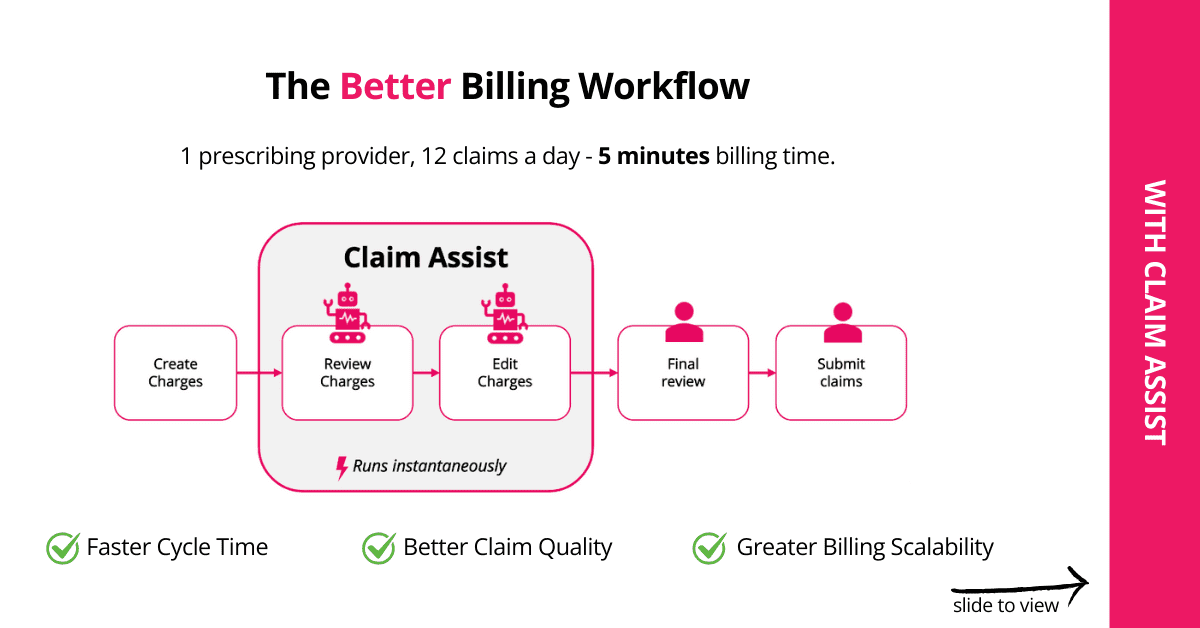
Claim Assist enables your practice to reduce review time by up to 90%,
accelerate submissions, and free your practice to grow without increasing overhead.

Automated Charge Review

Eliminate manual charge checks by automating the review process against 100+ behavioral health-specific billing rules.

Payer- and Program-Specific Billing Rules

Select or create payer- and program-specific rules that automatically catch and correct coding errors before submission.

Institutional Claim Bundling

Bundle services and submit 837i institutional claims to streamline IOP/PHP billing.

Error Detection and Correction

Identify missing or incorrect data before claim submission so your billing team can address avoidable issues before they become rejections or denials.

Batch Claim Edits

Resolve errors that need to be reviewed prior to claim submission with an organized worklist.

Customizable Billing Rules

Leverage our extensive library of billing rules and tailor them to fit your practice’s unique payer requirements.

How Claim Assist Works

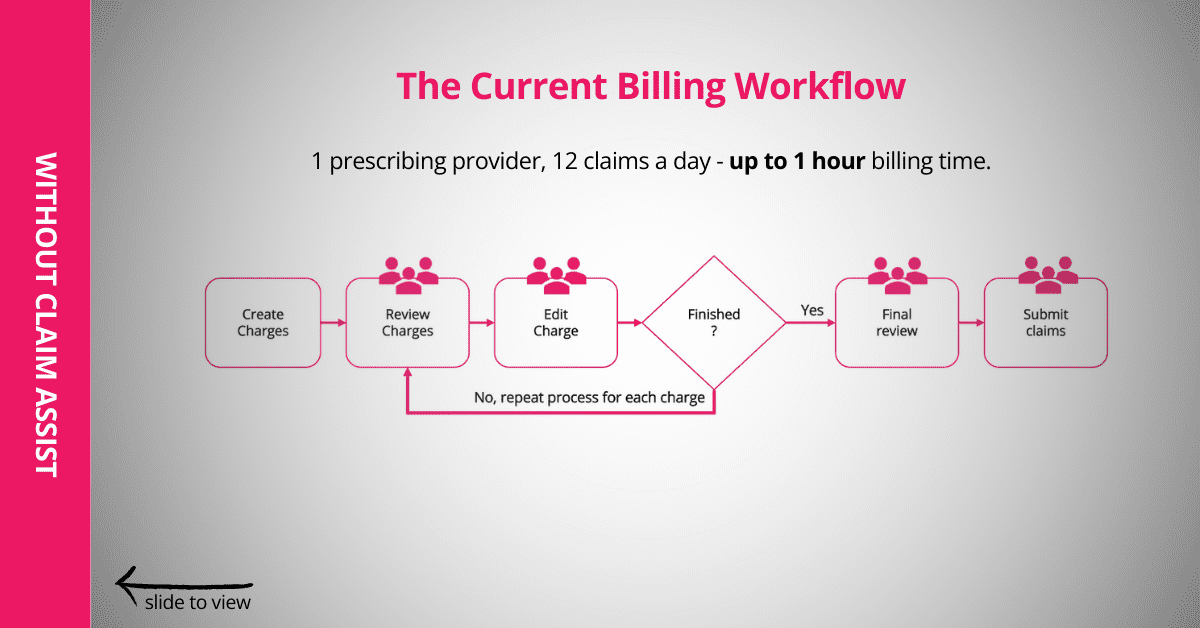
Claim Assist checks charges for errors, auto-fixes charges with preset rules,
and flags only claims needing special attention for billers to review.

The workflow is designed to move routine charge review into the background while keeping your billing team involved where judgment is needed:

  1. Valant captures charges from the underlying visit and documentation workflow.
  2. Claim Assist reviews charges against configured behavioral health, payer, and program rules.
  3. Qualifying errors are corrected automatically according to preset rules.
  4. Charges that require human review appear in an organized worklist.
  5. Your billing team resolves outstanding issues and moves cleaner claims toward submission through Valant’s integrated billing workflow.

See a before-and-after workflow example of a practice with Claim Assist.

How Claim Assist Fits Into Behavioral Health Claims Management

Claim Assist focuses on the point in the revenue cycle where many preventable problems begin: before the claim is submitted. By automatically reviewing charges and applying consistent billing rules, it can reduce the amount of manual claim scrubbing your team performs and help prevent avoidable errors from reaching the payer.

After submission, Valant’s billing tools provide visibility into claim status so your team can see which claims are moving forward and which require follow-up. This creates a more connected path from charge review to submission and reimbursement rather than treating each stage as a separate process.

To understand the broader claim lifecycle, including rejection, denial, and appeal workflows, explore Mental Health Billing: What Every Therapist Needs to Know.

What You Can Do With Claim Assist

Speed up submissions, reduce errors, and improve staff cognitive load with a billing agent that automatically reviews and edits charges based on behavioral health billing rules.

Focus Your Billing Efforts

Reduce billers’ cognitive load and redirect them to higher-value revenue cycle work by using Claim Assist to handle repetitive charge review and editing based on configured rules.

Get Cleaner Claims Out the Door Faster

Catch missing information, coding problems, and other configuration errors before submission. Consistent pre-submission review can reduce avoidable rework and help your team move claims into the reimbursement cycle sooner.

Track Your Claim Submission Progress

Gain visibility and eliminate revenue cycle guesswork through a full view of where every claim stands, putting you in control of your financial health.

Claim-status visibility also gives your team a clearer starting point for follow-up. Rather than manually piecing together which claims require attention, billers can focus on exceptions, aging claims, rejections, and denials that need action.

What Types of Practices Benefit from Claim Assist?

Claim Assist can be especially valuable when billing complexity grows faster than your team. More providers, payer contracts, locations, and levels of care introduce more opportunities for inconsistent rule application, making automated pre-submission review increasingly useful.

Growing practices looking to scale billing without adding staff.

Practices accepting multiple payers with different rules for services such as incident-to billing.

Billing teams managing the revenue cycle for multiple service lines or programs.

What About Denials and Appeals?

Claim Assist is primarily a pre-submission tool. Its role is to catch and correct potential billing problems before claims reach the payer, which can reduce preventable denials and the rework they create.

When a claim is denied, Valant’s broader billing workflow gives practices visibility to investigate and follow up. Practices that use Valant Revenue Cycle Management can also work with a dedicated billing team that reviews denials and prepares and files claim appeals when appropriate.

This distinction is important: Claim Assist helps prevent problems upstream, while denial and appeal management addresses claims that have already encountered reimbursement issues.

Scale Behavioral Health Billing with Less Manual Review

Claim Assist streamlines behavioral health billing by automating charge reviews and applying payer-specific rules, helping practices reduce manual review time by up to 90%, improve claim accuracy, and accelerate submissions.

Because Claim Assist works within Valant’s billing environment, your practice can automate more of the repetitive review process without creating another disconnected billing workflow for staff to manage. For a deeper look at the feature and the operational problems it was built to address, read How Claim Assist Transforms Behavioral Health Billing.

For practices looking to further support billing operations, Valant’s Revenue Cycle Management services provide a dedicated billing team that works within your EHR to help manage claims, address denials, and maintain consistent revenue cycle performance.

Designed for IOP/PHP Billing

Designed for IOP/PHP Billing

IOP and PHP add complexity to the billing process. Claim Assist simplifies it by letting you build customizable billing rules that flag and fix coding errors automatically.

The system also supports bundled billing, enabling you to generate and submit institutional claims directly. Together, these tools reduce denials, speed reimbursement, and keep IOP/PHP billing as smooth as outpatient workflows.

For programs submitting 837i institutional claims, automated review is particularly valuable because billing may need to account for program-specific services, revenue codes, payer requirements, and bundled charges. Claim Assist gives your team a consistent rule-based checkpoint before those claims are submitted.

Learn more about preventing institutional claim problems in Stop IOP/PHP Denials Before They Happen.


Cut Denials and Rejections with Automated Accuracy

If your practice doesn’t have the capacity to manually review every charge, you may face frequent denials and rejections. Claim Assist changes that by automatically identifying and correcting configured errors before claims are submitted.

The goal isn’t to guarantee that every claim will be paid. It’s to create a consistent pre-submission review process that catches more preventable problems before they require downstream correction.

How to Successfully Negotiate with Payers for Increased Reimbursement Rates

Achieve pay-for-performance in behavioral health and learn how to better position your practice to renegotiate with payers for increased reimbursement.

Frequently Asked Questions About Claim Assist

Claim Assist is a native feature that works within Valant’s billing and EHR environment rather than through a separate third-party claim-scrubbing platform. It reviews charges using behavioral health-specific rules and routes exceptions into the existing billing workflow for staff review.

Valant provides claim-status visibility that helps billing teams identify claims requiring follow-up, while Claim Assist helps reduce preventable errors before submission. If your practice uses Valant Revenue Cycle Management, Valant’s billing team can also manage denied claims and prepare and file appeals when appropriate.

Valant Claim Assist supports payer- and program-specific billing rules that can identify and correct configured errors before claims are submitted. Practices can use Valant’s existing behavioral health billing-rule library and customize rules around specific payer requirements.

Valant combines behavioral health claim review with broader billing and revenue cycle workflows in the same platform. Claim Assist automates pre-submission charge review and correction, while Valant billing tools support claim tracking, and Valant Revenue Cycle Management can provide additional denial management and appeal support.

Valant connects documentation, charge capture, billing review, and claim submission within a behavioral health-specific EHR workflow. Claim Assist automates the pre-submission review stage by applying billing rules, correcting configured errors, and flagging exceptions before claims move forward for submission.

See Other Ways Valant Can Improve Your Administrative Efficiency

What They’re Saying

“Progress notes are easy to use and treatment plan suggestions make this process easy. Informed Consent, Diagnosis page, Mental Status Exam and many other suggested or necessary documents are at your fingertips.”

Ann S.Owner

“The software facilitates efficient screening, scheduling, initial evaluation, and ongoing treatment by allowing the patient to interact directly with administrative personnel, clinicians, and assessment instruments.”

David B.Owner

“It is intuitive and easy for our counselors to use… organization of patient charts and history is outstanding.”

Candyce N.Administrator

Related Resources

BlogEHR TechnologyManaging Your PracticeOffice ManagerPractice OwnerHow to Choose the Right Mental Health EHR
October 13, 2026

How to Choose the Right Mental Health EHR

Shopping for the right mental health electronic health record (EHR) is challenging for private practices. Software vendors package feature sets and services in different ways, making it difficult to do direct comparisons.  How you choose the right mental health EHR…
Shot of female psychologist using digital table while standing in her officeBlogBilling for Behavioral HealthEHR TechnologyFeaturedManaging Your PracticePatient PortalPractice OwnerSchedulingHow Efficient is Your Private Practice? Take the Quiz to Find Out
October 9, 2026

How Efficient is Your Private Practice? Take the Quiz to Find Out

As a behavioral health professional, the total amount of work you put into your practice goes well beyond  one-to-one time spent with patients. For every billable hour, your practice must also account for the time spent on documentation, billing, and…
Clinician works with mental health progress note templateBlogClinical CareClinical DocumentationClinical ReportingEHR TechnologyManaging Your PracticeNon-Prescribing ClinicianOffice ManagerPatient EngagementPractice AdministrationPractice OwnerPrescribing ClinicianBoost Productivity with Prebuilt and Custom Mental Health Progress Note Templates
August 21, 2026

Boost Productivity with Prebuilt and Custom Mental Health Progress Note Templates

Clear and organized documentation is a must for behavioral health providers. Progress notes and therapy notes are a key part of keeping your treatment strategy on track, yet documentation is a challenge to keep up with. One way to strengthen…

See How We Can Help Your Team Today

Or Contact Us to Speak with a Specialist